If you live in Puyallup or anywhere nearby, you know how much we rely on our heat pumps to keep things comfortable year-round. One day, they are humming along just fine, the next day the house feels off, and something just does not seem right. Often, the culprit is not the entire system, but a small part most homeowners have never heard of, the capacitor.
At Taylor Heating, Cooling, Plumbing & Electrical, we see capacitor issues all the time. They are common, frustrating, and easy to overlook. Knowing the warning signs can help you avoid a full system breakdown and get ahead of the problem before your heat pump quits when you need it most.
Contact Taylor today for heat pump capacitor replacement, as well as other trusted heat pump repair or heat pump maintenance in Puyallup, WA, and the surrounding areas.
What a Heat Pump Capacitor Actually Does
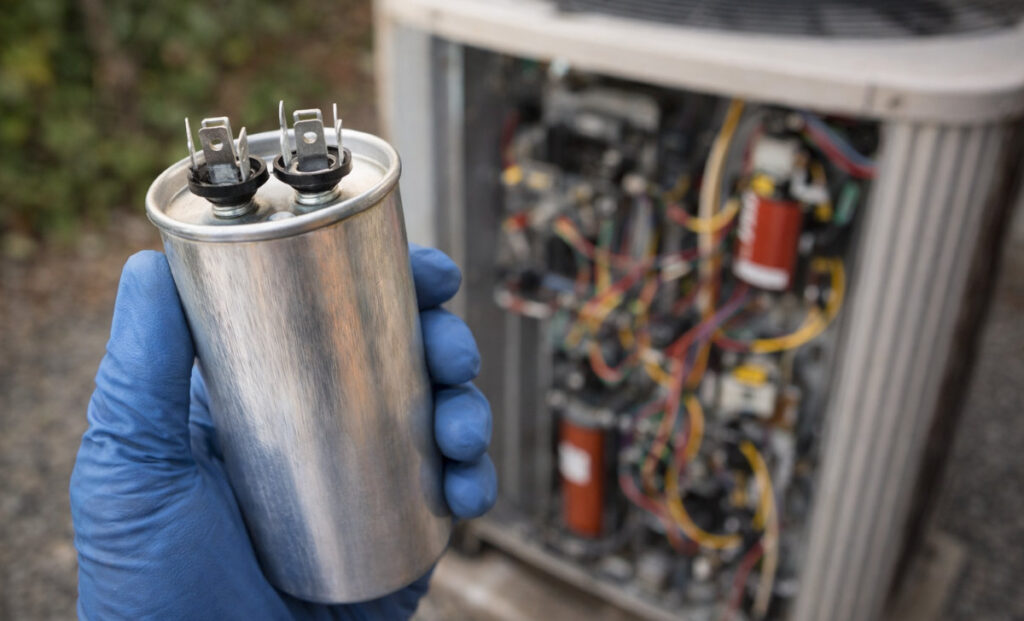
Before we get into the symptoms, it helps to understand what the capacitor is responsible for. Think of the capacitor as a temporary battery. It stores energy and releases it in short bursts to help your heat pump motors start up and run smoothly. Without it, the system struggles or fails to operate at all.
Most heat pumps use capacitors for key components like the compressor and the fan motors. When a capacitor weakens, those parts do not get the electrical boost they need. Over time, this extra strain can cause bigger and more expensive problems.
A healthy capacitor helps your heat pump:
- Start quickly and smoothly
- Maintain steady operation
- Use electricity efficiently
- Reduce wear on motors and compressors
- Deliver consistent heating and cooling
When it starts to fail, the system has to work harder just to do basic tasks.
The Heat Pump Struggles to Start or Will Not Turn On
One of the most common signs of a weak or dying capacitor is trouble starting up. You may notice your heat pump hesitating, clicking, or failing to turn on at all when the thermostat calls for heating or cooling. Sometimes it starts after a few tries, sometimes it does not.
This happens because the capacitor can no longer store and release enough energy to kick the motor into motion. It is similar to trying to start a car with a dying battery. You might get lucky once or twice, but eventually it stops working altogether.
Watch for these startup-related symptoms:
- A clicking sound when the system tries to turn on
- The outdoor unit humming but not running
- Delayed startup after adjusting the thermostat
- Frequent tripped breakers when the system starts
- Complete failure to turn on
If you notice these issues, it is best not to keep forcing the system to run. That extra strain can damage other components.
Warm Air, Weak Airflow, or Inconsistent Comfort
A failing capacitor does not always stop your heat pump completely. Sometimes it limps along, delivering poor performance that slowly gets worse. You may feel warm air during cooling season, lukewarm air in winter, or notice uneven temperatures from room to room.
This happens when the fan or compressor is not running at full strength. The capacitor cannot deliver consistent power, so the system struggles to move air and transfer heat properly.
Common comfort-related signs include:
- Air coming from vents feels weaker than usual
- Rooms take much longer to reach the set temperature
- The system runs constantly without improving comfort
- Hot and cold spots throughout the house
- Sudden changes in comfort without thermostat changes
Many homeowners assume these problems mean their heat pump is old or failing completely. In reality, a simple capacitor replacement can often restore normal operation.
Strange Noises Coming From the Outdoor Unit
Your heat pump should not be noisy. A low hum is normal, but grinding, buzzing, or rattling sounds are not. A failing capacitor often causes unusual noises, especially from the outdoor unit.
When the capacitor cannot provide enough power, motors struggle to start and stay running. This strain creates vibration and noise. You might hear the unit trying to start, failing, then trying again.
Listen for sounds like:
- Loud buzzing or humming
- Clicking or tapping noises
- Short bursts of noise followed by silence
- A fan that tries to spin but stops
- Sudden loud starts and stops
Ignoring these noises can lead to motor burnout or compressor failure, both of which are far more expensive than replacing a capacitor.
Higher Energy Bills With No Clear Explanation
Another sneaky sign of a weak capacitor is a gradual rise in your energy bills. When your heat pump is not running efficiently, it has to work longer and harder to maintain comfort. That extra runtime shows up on your monthly utility statement.
Capacitors tend to fail slowly, so homeowners often miss this sign until the bill becomes noticeably higher. If your usage habits have not changed and the weather has been fairly typical, a sudden jump in costs is worth investigating.
Energy-related warning signs include:
- Higher electric bills during mild weather
- Longer system run times
- Frequent cycling on and off
- Reduced efficiency without obvious mechanical failure
- No improvement after thermostat adjustments
Catching a capacitor issue early can save you money and reduce wear on your heat pump.
The System Shuts Off Unexpectedly or Short Cycles
Short cycling happens when your heat pump turns on, runs briefly, then shuts off before completing a full heating or cooling cycle. A weak capacitor can cause this behavior because the system cannot maintain proper operation once it starts.
This constant stopping and starting is hard on the equipment. It also leads to uneven comfort and unnecessary energy use. Over time, short cycling can damage major components.
Signs of this problem include:
- The system runs for only a few minutes at a time
- Frequent on and off cycling throughout the day
- Inconsistent temperatures despite frequent operation
- Breakers tripping during operation
- The outdoor unit stopping while the indoor fan keeps running
Short cycling is not something to ignore. It is a clear signal that something electrical is not right.
Visible Signs of Capacitor Failure You Might Notice
Sometimes the signs of capacitor trouble are visible, especially if you or a technician open the electrical panel. While we do not recommend homeowners inspect capacitors themselves due to safety risks, it helps to know what professionals look for.
Capacitors can swell, leak oil, or show burn marks when they fail. Heat, power surges, and age all contribute to this damage.
A failed capacitor may show:
- Bulging or swollen top
- Oil residue or leaking fluid
- Rust or corrosion
- Burnt wiring nearby
- Strong electrical or chemical smells
Because capacitors store electrical charge, even when the system is off, inspection and replacement should always be handled by trained technicians.
Is It Difficult to Replace a Heat Pump Capacitor?
Replacing a heat pump capacitor might sound simple, but it is rarely a true do-it-yourself task. On the surface, it looks like a small metal cylinder with a few wires attached. In reality, it plays a powerful electrical role and can be dangerous if handled incorrectly.
Even when the heat pump is turned off, a capacitor can still hold a strong electrical charge. One wrong move can result in a serious shock, damaged equipment, or both. Proper testing tools, electrical knowledge, and safety procedures matter more than most people realize.
Can I Replace My Heat Pump’s Capacitor Myself?
It is tempting to consider replacing a capacitor on your own, especially after watching a few online videos. We understand the appeal, it looks quick and inexpensive at first glance. But there are real risks involved that are easy to underestimate.
Here are a few reasons we do not recommend DIY capacitor replacement:
- Capacitors can store dangerous voltage even when power is off
- Installing the wrong size or type can damage the system
- Wiring mistakes can burn out motors or control boards
- Improper handling may void manufacturer warranties
- There is a higher risk of electrical shock or fire
In most cases, calling a trained professional is the safest and smartest choice. It protects your system, your warranty, and most importantly, your safety.
Contact Taylor Heating, Cooling, Plumbing & Electrical for Heat Pump Capacitor Replacement Today
If your heat pump is showing any of these signs, it is time to call in help. At Taylor Heating, Cooling, Plumbing & Electrical, we know how frustrating unexpected comfort issues can be. Our technicians are trained to quickly diagnose capacitor problems and get your system back on track, often the same day.
We serve Puyallup and surrounding areas with honest recommendations, reliable repairs, and top-tier heating services. If the capacitor is the issue, we will explain what went wrong, replace it with the right part, and make sure everything else is running safely and efficiently.
Do not wait until a small electrical problem turns into a major system failure. Reach out to Taylor today and let us restore your heat pump performance, protect your investment, and keep your home comfortable through every season.