Heat Pump Maintenance for Puyallup Homes
Your heat pump heats your home in winter and cools it in summer. That means it works almost all year. Regular maintenance keeps it running well through both seasons. A tune-up helps your system use less energy, avoid breakdowns, and last longer.
Puyallup sits in IECC zone 4C. Nearby Seattle-Tacoma Airport records about 4,376 heating degree days and about 265 cooling degree days each year. Your heat pump works in both seasons, so maintenance has to cover heating and cooling. Annual rainfall near 39 inches keeps outdoor cabinets damp. That moisture speeds coil corrosion and rust on electrical lugs.
Our Team Keeps Your Heat Pump Ready for Every Season
Heat pumps in Puyallup have been cared for by Taylor Heating, Cooling, Plumbing & Electrical since 1984. NATE and EPA certified technicians find small problems before they turn into big ones.
Census data puts the median year built for Puyallup homes at about 1986. Many systems from that era are due for careful coil cleaning, refrigerant checks, and defrost testing. Homes along the Puyallup River and near the Washington State Fair Event Center share the same marine moisture that loads drain pans with algae.
Call 253-208-5315 to schedule heat pump maintenance in Puyallup, WA.
Our Heat Pump Maintenance Checklist
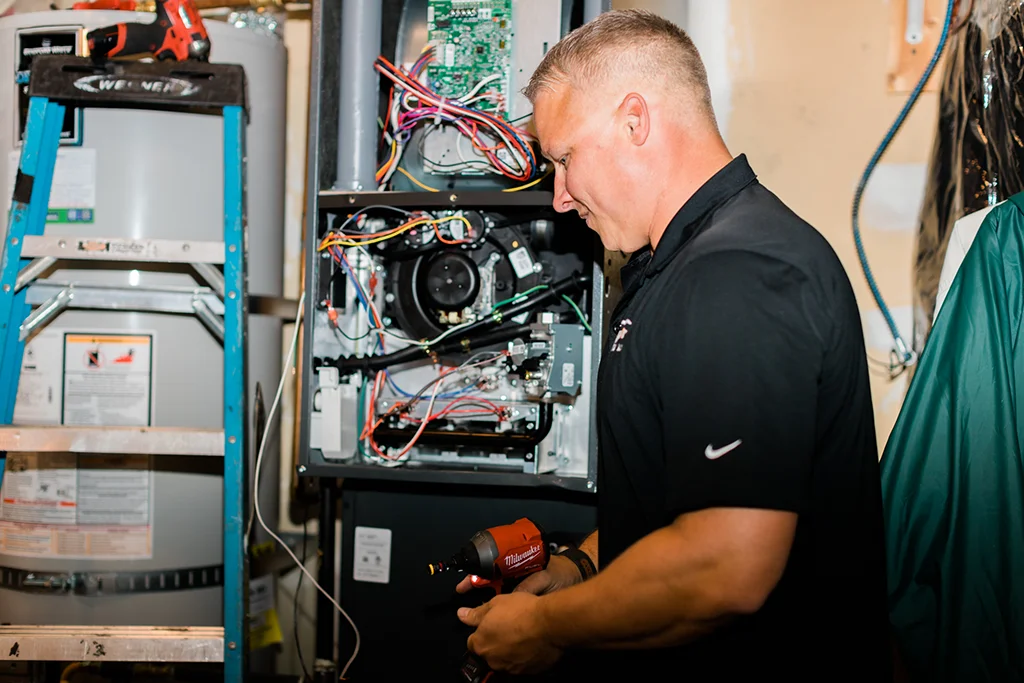
Our technicians follow the same full checklist on every visit. Here is what we check and why it matters:
- Air filter. We clean or replace the filter to keep air moving and protect the system.
- Indoor and outdoor coils. We clean the coils so they move heat well and resist icing.
- Refrigerant level. We test the charge and look for signs of a leak.
- Electrical connections. We tighten loose wires and look for corrosion.
- Capacitors. We test them so your motors start every time.
- Blower and fan. We clean and inspect them for smooth, quiet airflow.
- Defrost controls. We make sure your heat pump clears ice the right way in cold weather.
- Reversing valve. We confirm the system switches between heating and cooling.
- Condensate drain. We clear the line to prevent leaks and mold.
- Thermostat. We test it and calibrate it for accurate readings.
- Full system test. We run the system in both modes before we leave.
When we finish, we explain what we found and point out any worn parts. You get a clear report on the health of your system. If something needs a repair, we tell you why and give you an upfront quote. You decide what happens next, and we never start extra work without your okay. Many homeowners find their home feels more even and comfortable right after a tune-up. Your heat pump may also run more quietly once the fan and blower are clean.
Does Your Heat Pump Need a Tune-Up?
Yes. Every heat pump needs regular care, even a new one. You can change the filter yourself, but a full tune-up covers much more. Coils, refrigerant, and electrical parts need a trained technician.
Regular Maintenance Helps Prevent Costly Repairs
Most big repairs start as small problems. A loose wire, a weak capacitor, or a dirty coil can grow into a failed motor or compressor. A tune-up catches these early. When a repair is needed, our team also handles heat pump repair on the same system.
Puyallup weather makes maintenance even more important. Damp air can corrode coils and wires. Spring and fall bring many switches between heating and cooling. Each switch puts a little more wear on valves and controls.
What Happens When You Skip Maintenance
A heat pump that goes without care slowly loses its edge. Dust coats the coils, so the system works harder to move heat. Filters clog and airflow drops. Small electrical problems grow until a part fails. Bills creep up month after month. Your home takes longer to warm up or cool down. The outdoor unit ices up more often in winter. The system may break down on the coldest or hottest day of the year. A tune-up costs far less than a major repair. It also helps protect your equipment warranty, since many makers expect yearly service.
Signs Your Heat Pump Needs Maintenance
Your heat pump often tells you when it needs attention. Watch for uneven heating or cooling, a thermostat that responds slowly, higher energy bills, new noises or odd smells, and ice that stays on the outdoor unit.