
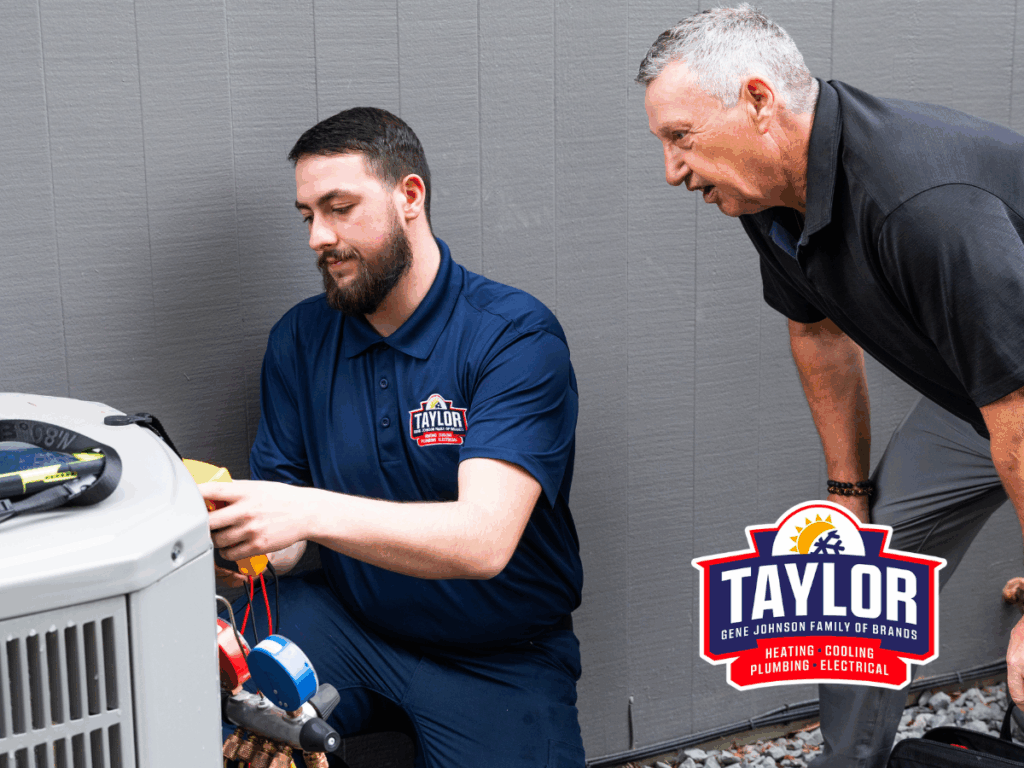
Heat pumps are built to be reliable, especially here in the Puyallup area, where we count on them through cool winters and mild summers. So when your system starts acting a little off, it can be confusing. Maybe the air does not feel quite right, or the system seems to be running nonstop without delivering comfort. One common cause we see behind the scenes is low refrigerant.
At Taylor Heating, Cooling, Plumbing & Electrical, we often remind homeowners that refrigerant is not something a heat pump uses up. If levels are low, there is usually a leak or underlying issue. Left unchecked, low refrigerant can trigger a chain reaction of problems that affect comfort, efficiency, and long-term system health.
Do you suspect your heat pump may have a refrigerant leak, or may be running on low refrigerant? Contact Taylor Heating, Cooling, Plumbing & Electrical today for refrigerant checks and refills, as well as top-tier heat pump maintenance and heat pump repair services.
Why Refrigerant Levels Matter More Than You Might Think
Refrigerant is what allows your heat pump to move heat rather than create it. In winter, it pulls heat from outdoor air and brings it inside. In summer, it reverses the process. The system relies on precise refrigerant levels to work properly, and even a small drop can throw things off.
When refrigerant runs low, pressure inside the system changes. That affects how efficiently heat is absorbed and released. The heat pump has to work harder to compensate, which leads to wear and tear across multiple components.
Low refrigerant can result in:
- Reduced heating and cooling capacity
- Longer run times
- Higher energy consumption
- Increased strain on the compressor
- Greater risk of system failure
This is why refrigerant issues should never be ignored or treated as a minor inconvenience.
Weak Heating or Cooling Performance Throughout the Home
One of the earliest and most noticeable signs of low refrigerant is poor temperature control. You may notice your home never quite reaches the temperature set on the thermostat. In winter, rooms feel chilly even though the system is running. In summer, the air feels lukewarm instead of cool.
This happens because the heat pump cannot absorb or release enough heat without proper refrigerant pressure. The system may still run, but it is no longer effective.
Homeowners often describe issues like:
- Air from vents feels weaker or less conditioned
- Rooms take much longer to warm up or cool down
- Hot and cold spots appear throughout the house
- The system runs constantly without satisfying the thermostat
- Comfort drops gradually over time
These performance problems often worsen slowly, making them easy to overlook until they become impossible to ignore.
Frozen Coils and Ice Buildup on the System
Low refrigerant can also cause parts of your heat pump to freeze, especially the evaporator coil. This seems counterintuitive, but it is a common problem. When refrigerant levels drop, pressure inside the coil falls, causing temperatures to dip below freezing.
Moisture in the air then freezes on the coil, forming ice. As the ice builds up, airflow becomes restricted and performance drops even further.
Signs of freezing related to low refrigerant include:
- Ice on the indoor or outdoor coil
- Frost buildup on refrigerant lines
- Water pooling near the indoor unit when ice melts
- Reduced airflow from vents
- Sudden loss of heating or cooling
Running a heat pump with frozen coils can cause serious damage. Turning the system off and calling for service is the safest move.
Higher Energy Bills With No Clear Explanation
When refrigerant is low, your heat pump loses efficiency fast. Since it cannot transfer heat effectively, it has to run longer to achieve the same results. That extra runtime shows up clearly on your utility bill.
Many homeowners assume rising energy costs are due to weather changes or rate increases. While those can play a role, low refrigerant is a frequent hidden cause.
You may notice:
- Bills climbing even during mild weather
- Longer daily system operation
- Less comfort despite higher energy use
- No improvement after thermostat adjustments
- Gradual increases month after month
Addressing refrigerant issues early helps protect your wallet and reduces unnecessary wear on the system.
Increased Wear and Risk of Compressor Damage
The compressor is the heart of your heat pump, and it is also one of the most expensive components to replace. Low refrigerant puts the compressor under serious stress. It has to work harder to maintain pressure and circulation, which leads to overheating.
Over time, this strain can cause the compressor to fail completely. Once that happens, repairs become far more costly and sometimes replacement is the only option.
Low refrigerant increases the risk of:
- Compressor overheating
- Electrical overloads
- Premature component failure
- Emergency breakdowns
- Shortened system lifespan
Catching refrigerant problems early can make the difference between a simple repair and a major expense.
Strange Noises and Unusual System Behavior
Another issue we see with low refrigerant is strange system behavior. The heat pump may sound different, cycle more frequently, or behave unpredictably. These symptoms often accompany pressure imbalances within the system.
You might hear hissing noises from refrigerant leaks or notice the system starting and stopping more often than usual. These are warning signs that should not be ignored.
Watch for:
- Hissing or bubbling sounds
- Frequent on-and-off cycling
- Loud operation during startup
- Breakers tripping unexpectedly
- Error codes on newer systems
These symptoms often point to underlying refrigerant leaks that require professional detection and repair.
Why Refrigerant Problems Never Fix Themselves
Refrigerant does not evaporate or get used up over time. If levels are low, there is almost always a leak somewhere in the system. Simply adding more refrigerant without fixing the leak is a temporary solution at best.
Leaks can occur at joints, valves, or coils, and they require specialized tools to locate and repair safely. Handling refrigerant is regulated and should always be performed by licensed professionals.
Ignoring the root cause can lead to:
- Repeated refrigerant loss
- Ongoing efficiency problems
- Environmental concerns
- Increased repair costs
- Continued system damage
Proper diagnosis and repair protect both your system and your peace of mind.
Can I Refill or Replace Heat Pump Refrigerant Myself?
It is a common question, especially when homeowners notice cooling or heating problems and suspect low refrigerant. On the surface, it can seem like a simple refill might solve the issue. In reality, refrigerant handling is tightly regulated and far more complex than it appears. Heat pumps are sealed systems, and refrigerant levels should never drop unless something is wrong.
Here are a few important reasons we do not recommend DIY refrigerant work:
- Refrigerant can cause serious injury if handled improperly
- Specialized tools are required to measure and balance levels accurately
- Federal regulations require proper licensing to handle refrigerants
- Adding refrigerant without fixing leaks leads to repeat problems
- Incorrect charging can damage the compressor and void warranties
Calling a licensed professional protects your safety, your system, and your long-term comfort.
Call Taylor Today for Heat Pump Refrigerant Checks and Refills
If your heat pump is struggling, low refrigerant could be at the heart of the problem. At Taylor Heating, Cooling, Plumbing & Electrical, we help homeowners in Puyallup and surrounding areas identify refrigerant issues quickly and fix them the right way. Our trained technicians locate leaks, make proper repairs, and restore your system to safe operating levels.
Do not wait for low refrigerant to turn into a major breakdown. Reach out to Taylor today at 253.208.5315 or contact us online for professional heating and cooling services, and let us bring your heat pump back to reliable, efficient comfort so your home feels right again in every season.