When your air conditioner or heat pump suddenly stops working on a warm Puyallup afternoon, the HVAC capacitor is often the first suspect. You might hear a humming sound, notice the system struggling to start, or see the outdoor unit sitting quietly while the thermostat begs for cool air. A quick online search makes capacitor replacement look simple, cheap, and fast, which naturally leads to the big question.
Can you really replace an HVAC capacitor yourself, or is this one of those jobs best left to a professional? The honest answer is that it depends, but there’s a lot more risk involved than most DIY videos let on. Before grabbing a screwdriver, it’s worth understanding what a capacitor does, what can go wrong, and when calling a pro makes more sense.
What an HVAC Capacitor Actually Does
An HVAC capacitor is a small but critical electrical component. Its main job is to store and release energy to help motors start and run smoothly. In most systems, capacitors support the compressor, the condenser fan motor, or both.
Without a working capacitor, motors struggle to start. They may hum, overheat, or shut down entirely. Capacitors are under constant electrical stress, which means they wear out faster than many other HVAC parts. That’s why capacitor failures are so common during peak cooling season.
Capacitors also hold an electrical charge even after the system is powered off. That stored energy is what makes them dangerous to handle without proper training. Understanding their role helps explain why this seemingly simple part deserves respect and caution.
Signs a Capacitor May Be Failing
Capacitors usually give some warning before they fail completely. Homeowners often notice changes in performance before the system stops working altogether. Paying attention to these signs can help you act sooner and avoid bigger issues.
Here are some common symptoms of a failing HVAC capacitor:
- Humming or buzzing sounds: The system tries to start but cannot fully engage.
- AC blows warm air: The fan may run while the compressor struggles.
- Delayed startup: The system takes longer than usual to turn on.
- Frequent shutdowns: Motors overheat and shut off for protection.
- Visible bulging or leaking: A swollen capacitor top is a clear red flag.
While these signs often point to a capacitor, they can also signal other electrical or motor problems. That’s where diagnosis becomes important.
Why DIY Capacitor Replacement Is Risky
On paper, replacing a capacitor looks straightforward. Remove the panel, disconnect wires, swap the part, and reconnect everything. In reality, there are real risks involved, even for experienced DIYers.
Capacitors can store a dangerous electrical charge long after power is shut off. A wrong move can result in a serious shock. Wiring mistakes are another concern. Mixing up terminals or installing the wrong capacitor rating can damage motors or control boards instantly.
Here are some of the biggest risks homeowners face with DIY capacitor replacement:
- Electrical shock: Capacitors can discharge unexpectedly and cause injury.
- Incorrect part selection: Wrong voltage or microfarad ratings can damage equipment.
- Wiring errors: Misplaced wires may fry motors or control boards.
- Hidden issues: A bad capacitor may be a symptom, not the root problem.
- Voided warranties: DIY repairs can cancel manufacturer or labor warranties.
- Code and safety violations: Improper repairs may fail inspections or insurance reviews.
What looks like a money-saving move can turn into a costly repair very quickly.
When DIY Might Be Considered (With Caution)
There are situations where homeowners consider replacing a capacitor themselves, usually after confirming the issue and having experience with electrical work. Even then, caution is critical.
DIY replacement might be considered if:
- The system is out of warranty
- You are comfortable working with electrical components
- You have the exact replacement part specified by the manufacturer
- You understand how to safely discharge a capacitor
- You accept the risks involved
Even in these cases, professional diagnosis is often recommended first. A technician can confirm the capacitor is truly the problem and ensure there are no underlying issues that could cause the new one to fail prematurely.
How Professionals Replace HVAC Capacitors Safely
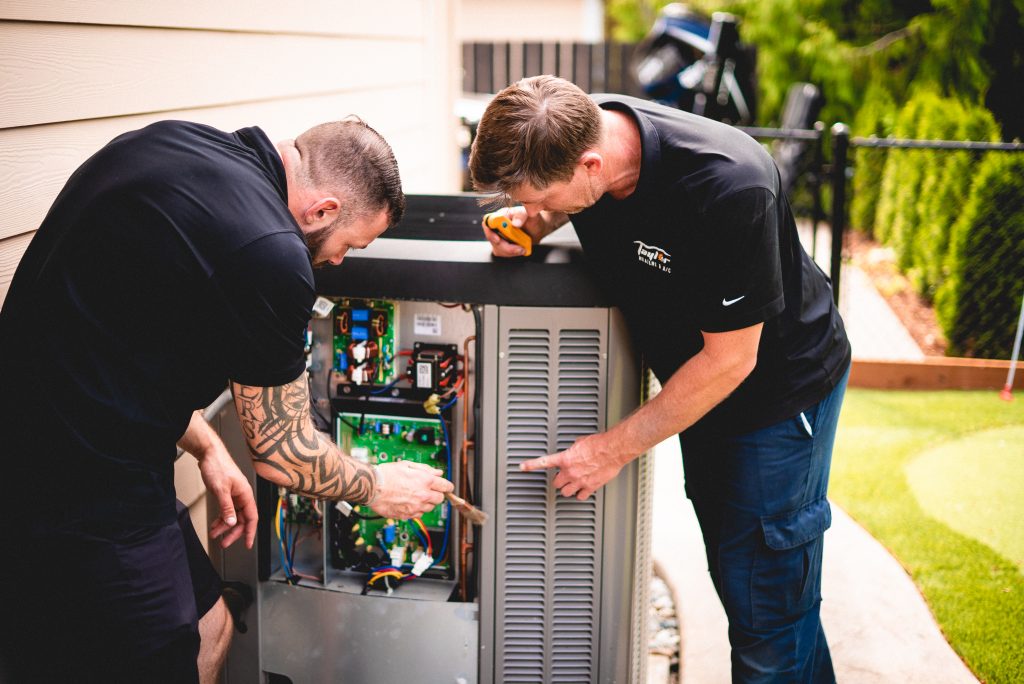
Licensed HVAC technicians follow strict safety steps when replacing capacitors. This isn’t just about protecting themselves, it’s about protecting your system and home.
A professional replacement typically includes:
- System shutdown and lockout: Power is fully disconnected and verified.
- Capacitor discharge: Stored energy is safely released before handling.
- Correct part matching: Voltage and microfarad ratings are verified precisely.
- Wiring inspection: Connections are checked for damage or corrosion.
- Performance testing: The system is tested under load after installation.
- Root cause evaluation: Technicians look for reasons the capacitor failed early.
That last step is key. Capacitors often fail because of heat, voltage issues, or failing motors. Replacing the part without addressing the cause can lead to repeat failures.
Cost Comparison: DIY vs Professional Repair
One reason homeowners consider DIY capacitor replacement is cost. Capacitors themselves are relatively inexpensive. Professional service includes labor, expertise, safety measures, and system testing.
DIY costs may include:
- Capacitor purchase
- Tools and safety equipment
- Time spent diagnosing and installing
Professional service costs include:
- Accurate diagnosis
- Correct part selection
- Safe installation
- Warranty-backed labor
- Protection against further damage
When mistakes happen during DIY repairs, repair costs can jump significantly. A damaged compressor or fan motor costs far more than a professional capacitor replacement would have in the first place.
How to Decide What’s Right for Your Home
The real question isn’t just can you replace an HVAC capacitor yourself, it’s whether you should. For most homeowners, the risks outweigh the savings. HVAC systems are expensive, and one wrong step can turn a minor repair into a major one.
Ask yourself these questions before deciding:
- Am I comfortable working around high-voltage electrical components?
- Do I know how to safely discharge a capacitor?
- Am I certain the capacitor is the only issue?
- Can I afford the risk if something goes wrong?
If there’s any hesitation, calling a professional is the safer move. Peace of mind is worth a lot when it comes to your home’s comfort and safety.
Call Taylor for HVAC Capacitor Replacement in Puyallup, WA!
If your HVAC system isn’t starting, humming, or keeping you comfortable, Taylor Heating, Cooling, Plumbing & Electrical is ready to help. We’ve been serving Puyallup and the surrounding areas since 1984, and capacitor issues are something we handle every day. Our trained technicians diagnose the problem correctly and fix it safely the first time.
Whether it’s a failed capacitor or something more complex, we’ll explain what’s going on and what makes the most sense for you. No guesswork, no unnecessary risk, just reliable comfort restored.
When you’re tempted to try a DIY capacitor fix, give Taylor a call instead at 253.208.5315 and let us take care of it, or carry out any other heating or cooling repair you may need.