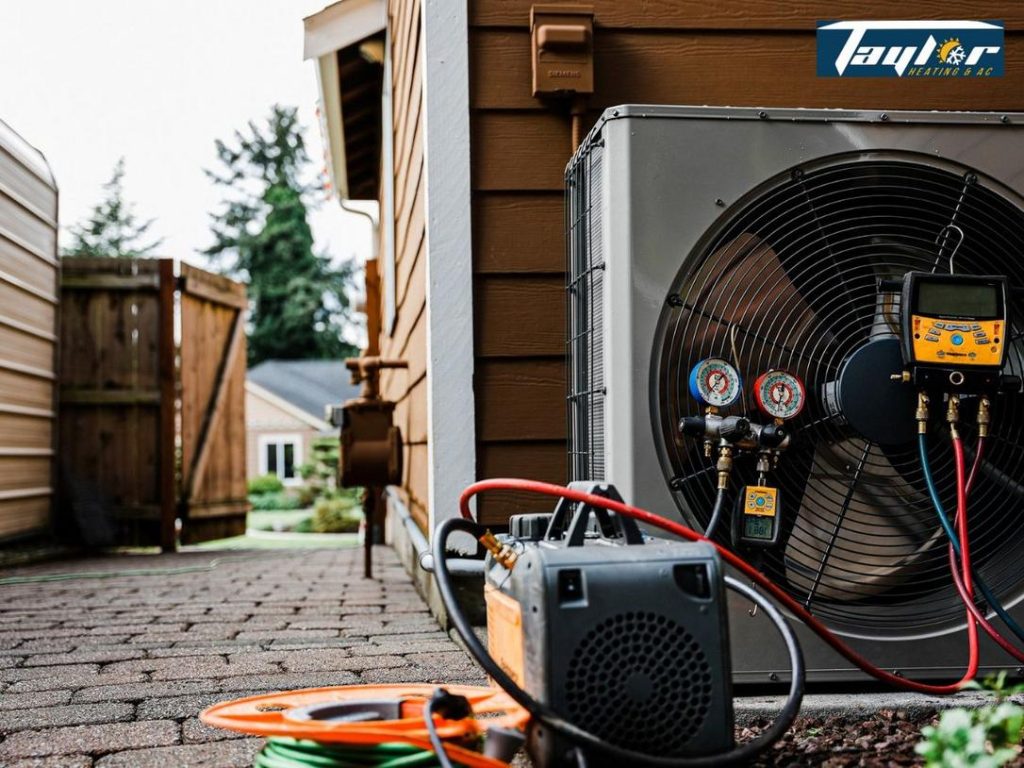
If your HVAC system was installed more than a decade ago, there’s a decent chance it uses a refrigerant that’s no longer considered modern or environmentally friendly. Homeowners around Puyallup often find this out the hard way, usually when their system stops cooling properly, and a technician mentions refrigerant costs that feel shockingly high. Suddenly, a simple repair turns into a bigger conversation.
Outdated refrigerants don’t automatically mean your system is doomed, but they do limit your options. Supplies are tighter, prices are higher, and regulations keep changing. Understanding what refrigerant your system uses and what choices you have can help you decide whether to repair, retrofit, or replace without feeling rushed or pressured.
Is your HVAC system running on outdated refrigerant? If so, reach out to Taylor Heating, Cooling, Plumbing & Electrical to ask about your options or to schedule your heating or cooling replacement.
Why Certain Refrigerants Were Phased Out
Refrigerants are essential to how air conditioners and heat pumps work, but not all refrigerants are created equal. Older types, especially R-22, were widely used for years because they were effective and affordable. Over time, scientists discovered that these refrigerants damaged the ozone layer and contributed to environmental harm.
Because of that, regulations gradually limited production and import of these chemicals. Today, some refrigerants are no longer manufactured at all, which means what’s left is reclaimed or recycled. That limited supply drives prices up and makes repairs more complicated.
Outdated refrigerants were phased out mainly due to:
- Environmental impact and ozone depletion
- Global warming potential
- International environmental agreements
- Availability of safer, more efficient alternatives
The goal wasn’t to punish homeowners, but to push the industry toward cleaner, more sustainable cooling solutions.
How to Tell If Your System Uses an Outdated Refrigerant
Most homeowners don’t know what refrigerant their system uses, and that’s completely normal. The information is usually listed on a data plate attached to the outdoor unit. If your system was installed before 2010, there’s a strong chance it uses R-22 or another phased-out refrigerant.
There are also a few performance clues that can hint at refrigerant-related issues. Reduced cooling power, longer run times, and frequent service calls often show up as systems age. That said, you’ll need a licensed technician to confirm the refrigerant type and condition safely.
Signs your system may rely on outdated refrigerant include:
- The system is 12 to 20 years old
- Cooling performance has slowly declined
- Refrigerant refills are quoted at very high prices
- Replacement parts are harder to source
Once you know what you’re dealing with, you can start weighing your options more clearly.
Option One: Keep the System Running With Repairs
In some cases, sticking with your current system for a bit longer makes sense. If the HVAC unit is otherwise in good shape and doesn’t have leaks, you might not need refrigerant service right away. Routine maintenance and minor repairs can sometimes keep things running smoothly for a few more seasons.
That said, this option comes with limits. If the system develops a refrigerant leak, topping it off can be expensive and may only provide a short-term fix. Over time, those repair costs can stack up fast.
This approach tends to work best when:
- The system cools well and has no refrigerant leaks
- You plan to replace the system within a few years anyway
- Repair costs are still reasonable
- Energy bills are not excessively high
It’s a temporary strategy, not a long-term solution, but it can buy you time if replacement isn’t feasible right now.
Option Two: Retrofit the System to a New Refrigerant
Some homeowners ask if they can simply switch their system to a newer refrigerant. In certain situations, retrofitting is possible, but it’s not as simple as swapping fluids. Different refrigerants require different pressures, oils, and components, and not all systems are compatible.
A retrofit usually involves replacing key parts like the compressor oil, seals, and sometimes the expansion device. Even then, performance may not match a system that was designed from the ground up for modern refrigerants.
Potential pros and cons of retrofitting include:
- Lower upfront cost: Retrofitting can cost less than full replacement in some cases.
- Extended system life: It may give you a few extra years of use.
- Limited efficiency gains: Older systems still lack modern efficiency features.
- Compatibility risks: Not all systems retrofit well, and reliability can vary.
A professional evaluation is critical here. Retrofitting works for some homes, but it’s not a universal fix.
Option Three: Replace the System With Modern Equipment
For many Puyallup homeowners, full replacement ends up being the most practical and cost-effective option. Modern HVAC systems use refrigerants like R-410A or newer low-impact alternatives, which are easier to source and designed to meet today’s efficiency standards.
New systems don’t just solve the refrigerant issue. They often cool and heat more evenly, run quieter, and significantly reduce energy consumption. Over time, those energy savings help offset the initial investment.
Replacement is often recommended when:
- Repair or refrigerant costs keep climbing
- The system is over 15 years old
- Comfort issues persist year after year
- Energy bills are noticeably high
- You want better efficiency and reliability
While replacement is a bigger step, it also resets the clock on comfort and dependability.
Cost, Efficiency, and Environmental Considerations
When deciding what to do, it helps to look beyond immediate repair costs. Older systems using outdated refrigerants are usually less efficient than modern equipment. That inefficiency shows up every month on your utility bill, not just when repairs are needed.
Environmental impact matters too. New refrigerants have lower global warming potential and are designed to meet stricter standards. Choosing to upgrade can reduce your home’s carbon footprint while improving comfort at the same time.
Key factors to weigh include:
- Short-term repair costs versus long-term savings
- Monthly energy usage and efficiency ratings
- Availability and cost of refrigerant
- Environmental impact and future regulations
- How long do you plan to stay in your home
Looking at the full picture helps avoid decisions you’ll regret a few years down the road.
Call Taylor Today for Any HVAC Refrigerant Problems You May Have!
If you’re unsure what refrigerant your system uses or what option makes the most sense, Taylor Heating, Cooling, Plumbing & Electrical is here to help. We’ve been serving Puyallup and surrounding communities since 1984, and we’ve guided countless homeowners through these exact decisions. Our goal is to give you clear information, not pressure.
We’ll inspect your system, explain what refrigerant it uses, and walk you through repair, retrofit, and replacement options based on your home and budget.
Whether you need a short-term fix or are ready for an air conditioning, furnace, or heat pump upgrade, Taylor helps you move forward with confidence. Call us today at 253.208.5315 or contact us online to schedule your next service.