
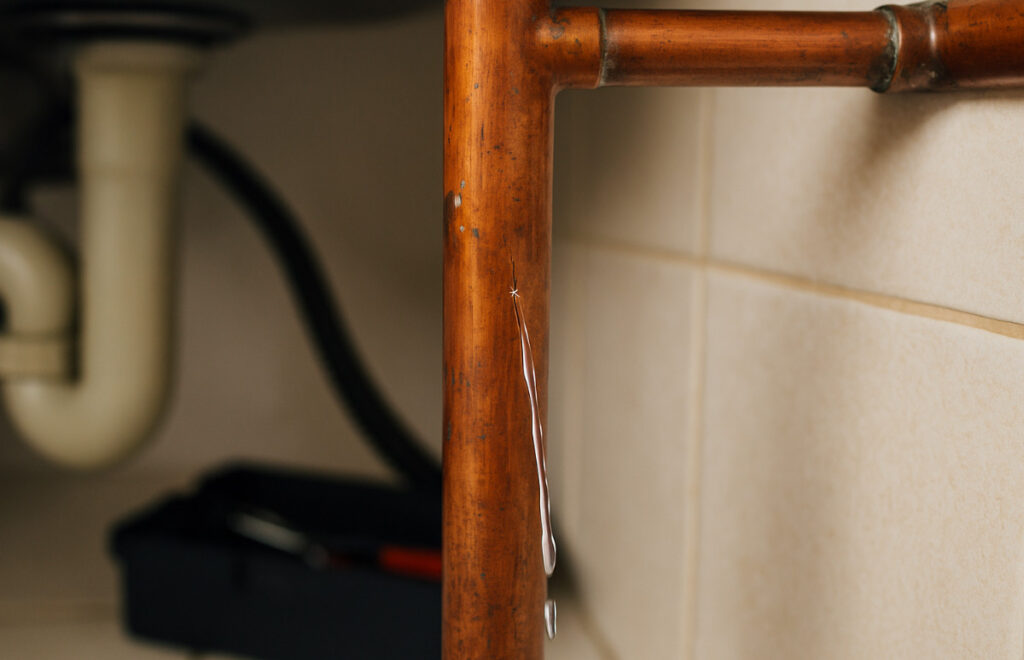
Hidden leaks have a way of sneaking up on homeowners, especially around Puyallup, where our mix of wet weather and older homes can put plumbing under more strain than you might expect. By the time a stain appears on a ceiling or you hear the faint sound of dripping behind a wall, the damage may already be underway. That is why leak detection is so important, whether you are worried about a tiny pinhole leak or a full slab leak hiding under the foundation.
Many of the emergency leak repair calls we respond to start with something small that went unnoticed for weeks or even months. A little water in the wrong place can warp floors, stain drywall, or create mold growth that quietly spreads. Knowing the warning signs and catching a problem early can save you time, money, and stress.
The Most Common Places Hidden Leaks Tend to Form
Some parts of the home are simply more leak-prone than others. Water lines run through walls, under floors, and above ceilings, and even strong materials wear down over time. Joints loosen, pipes rub against framing, and fittings develop hairline cracks. Since hidden leaks usually start small, homeowners often overlook early clues. You may notice a faint musty smell, a small wet spot, or even an unexplained bump in your water bill before any real damage shows itself.
Certain materials and older plumbing setups are more vulnerable. Galvanized pipes, for example, tend to corrode from the inside out. Copper pipes can wear thin where they pass through tight holes in studs or where water conditions are harsh. Homes with older plumbing systems can also experience pressure fluctuations that make fittings more vulnerable to failure.
Some of the most common leak hotspots include:
- Pipes inside exterior walls
- Plumbing hidden behind showers or tubs
- The water line running to the refrigerator
- Pipes under the kitchen sink or bathroom vanity
- Washing machine supply lines
- Lines feeding outdoor hose bibs
- Slab leaks beneath concrete foundations
- Older water heaters with corrosion at the base
Paying attention to these areas can help you spot issues early.
Signs You May Have a Hidden Leak
Not every leak shows itself in an obvious way. Some hide quietly behind surfaces until damage appears. The tricky part is that many warning signs do not seem like plumbing problems at first. A humming sound, a warm patch on the floor, or mold growth in a corner might not immediately point to a burst pipe or slow trickle. If you know what to look for, you can catch a small issue before it turns into a major repair.
Since water follows the path of least resistance, the damage sometimes shows up far away from the actual leak. Water from a pipe under the bathroom floor might stain the ceiling of the room below. A leak inside a wall might travel into the crawlspace before you ever see a single drip.
Common warning signs include:
- Unexpected increases in your water bill
- Musty or damp odors coming from hidden areas
- Peeling paint or bubbling drywall
- Warm spots on the floor from a hot water slab leak
- Water stains on ceilings or walls
- Mold or mildew growing in unusual areas
- The sound of running water when fixtures are off
- Low water pressure in just one area of the home
If you notice any combination of these clues, it may be time for leak detection from a professional.
How Leak Detection Works With Modern Technology
Leak detection has come a long way in recent years. What once required cutting into walls or pulling up sections of flooring can now be done far more accurately and with less disruption. The latest leak detection methods use specialized tools to trace moisture, pressure changes, and temperature variations. These tools help professional plumbers pinpoint the leak location quickly, so repairs can be made with minimal damage to your home.
Some leaks can be found through simple tools like moisture meters. Others require advanced listening equipment that identifies the specific frequency of water moving through a crack. Thermal imaging cameras are especially helpful for hidden hot water leaks, because warm water changes the temperature pattern behind walls or under floors. Pressure tests can also confirm whether a leak exists before any walls are opened.
Acoustic leak detection
This method uses sensitive listening devices to detect the sound of water escaping from a pipe. It works well for small leaks behind walls or in ceilings, where sound travels more easily than moisture.
Thermal imaging
Infrared cameras reveal temperature differences on surfaces. A warm or cool area that stands out from its surroundings can indicate a hidden pipe or a nearby leak that is spreading behind the scenes.
Moisture mapping
Moisture meters measure the amount of water in materials like drywall or flooring. When readings increase, it helps identify the direction the water is traveling and where it is coming from.
With all these tools available, leaks that once required guesswork are now much easier to locate accurately.
What to Know About Slab Leaks
A slab leak is one of the more serious types of hidden leaks because it forms under the concrete foundation of your home. Slab leaks can go unnoticed for long periods because they are buried deep. Many Puyallup homes, especially older ones, have water lines running underneath the foundation, which makes them more vulnerable to shifting soil and pipe wear. When a pipe breaks under the slab, the water often spreads quietly underneath the flooring.
Signs of a slab leak can be subtle. You might feel a strangely warm or damp area on the floor. Some homeowners notice cracks forming in tile or concrete. Others hear a faint hissing sound that never seems to stop. In more severe cases, you may see water pooling at the base of walls or around the exterior of the house.
Repairing slab leaks usually involves one of several approaches. Slab leak repair might mean cutting into the slab and repairing the pipe directly. In other cases, pipe re-routing or installing a new pipe around the damaged area is the better option. The right approach depends on the age of the plumbing, the overall condition of the lines, and the size of the leak. Professional plumbers can evaluate which method will last longer and prevent future failures.
Temporary Fixes vs. Permanent Repairs
When homeowners first discover a leak, the natural instinct is to try to stop it quickly. That is understandable, especially when water is spreading into living areas. Temporary measures can be helpful, but they are not solutions. Tape, clamps, or quick sealants may slow the leak, but they cannot withstand long-term water pressure. In fact, some temporary fixes hide the problem and lead to bigger issues later.
Permanent leak repair is always the goal. A professional can inspect the leak and decide whether a small fix will be reliable or if a larger repair is needed. In homes with older plumbing systems, repiping or installing a new pipe may offer better protection long term. Repairs to copper or PVC pipes vary depending on where the damage is located. A pinhole leak behind a wall may be repaired with a small section replacement, while widespread corrosion might require larger upgrades.
Before committing to a repair, homeowners should consider:
- The age of the plumbing system
- Whether the leak is isolated or part of a bigger issue
- The type of pipe material and its remaining lifespan
- Whether nearby pipes show signs of corrosion
- How accessible the repair area is
- Whether a slab leak is involved
- Long-term water pressure and usage needs
A permanent fix saves money by preventing repeated failures.
How to Prevent Frozen and Burst Pipes
Living in the Pacific Northwest, we do not experience long severe winters, but cold snaps do happen. A frozen pipe can turn into a burst pipe fast. As ice expands inside a pipe, pressure builds until the pipe cracks. Once temperatures rise and the ice melts, the result is a sudden rush of water that can damage floors, crawlspaces, and walls in minutes. Frozen pipe prevention is important both during winter and in areas of the home that naturally stay cold, such as garages or crawlspaces.
Insulating exposed pipes is one of the simplest ways to prevent freezing. Outdoor hose bibs should also be winterized before the first freeze. Leaving cabinet doors open beneath sinks allows warm air to reach pipes during cold nights. If you suspect a pipe has frozen, turning off the water supply immediately can prevent a costly burst pipe repair later. Professional plumbers can thaw pipes safely when needed, especially if the frozen area is hard to reach.
Good habits for preventing frozen pipes include:
- Insulating exposed plumbing
- Using frost-proof hose bibs
- Keeping garage doors closed during cold weather
- Opening cabinets to allow warm air to circulate
- Setting the thermostat to stay consistent at night
- Letting faucets drip slightly during extreme cold
- Checking crawlspaces for drafts
- Turning off outdoor water lines before winter
A few simple precautions can prevent major water damage.
When It’s Time to Consider Repiping
Some homes have plumbing that is simply too old or too damaged for spot repairs. If multiple leaks have occurred over a short period of time, it may be a sign that the pipes have reached the end of their lifespan. Repiping is a more thorough solution that replaces aging lines with modern materials designed to last longer and resist corrosion. For many homeowners, repiping provides peace of mind because it eliminates hidden weaknesses in the system.
New pipe installation can also improve water pressure and reduce the risk of future failures. Homes with old galvanized lines benefit greatly from updated plumbing. In certain situations, a partial repipe is enough to stabilize the system. In others, full repiping is the best choice. A professional plumber can explain the options and help you decide whether installing a new pipe in specific areas or replacing the entire system is the smarter investment.
Repiping is often recommended when:
- Leaks are recurring in multiple areas
- Pipes show widespread corrosion
- Water pressure is consistently low
- Discolored water comes from the taps
- Slab leak repair is too costly or difficult
- Burst pipe issues happen repeatedly
- Older materials like galvanized steel are still in place
Repiping is one of the most effective long-term solutions for preventing hidden leaks.
Call Taylor Heating, Cooling, Plumbing & Electrical Today for Any Plumbing Emergency
Hidden leaks do not wait for a convenient moment, and when a problem shows up unexpectedly, you need a team you can trust. At Taylor Heating, Cooling, Plumbing & Electrical, we help Puyallup families and homeowners throughout the surrounding area with fast, reliable plumbing services. Whether you suspect a slow leak behind the wall or you are dealing with sudden water damage, our technicians know how to track it down and fix it quickly.
We use advanced leak detection tools and proven repair methods to keep your home safe and protected. From slab leak repair to burst pipe emergencies, we handle every job with care and professionalism. If you notice signs of a hidden leak, do not wait for the damage to spread. Call our team today and get the help you need from expert, professional plumbers who know how to protect your home.